Power Wheels Maintenance & Battery Care Guide
How to maintain a Power Wheels or ride-on toy so it lasts. Covers battery care, storage, tire maintenance, motor care, and the most common mistakes parents make.
Affiliate Disclosure
This page contains affiliate links. As an Amazon Associate, PowerWheels HQ may earn a commission on qualifying purchases at no extra cost to you. Our reviews and recommendations are editorially independent.
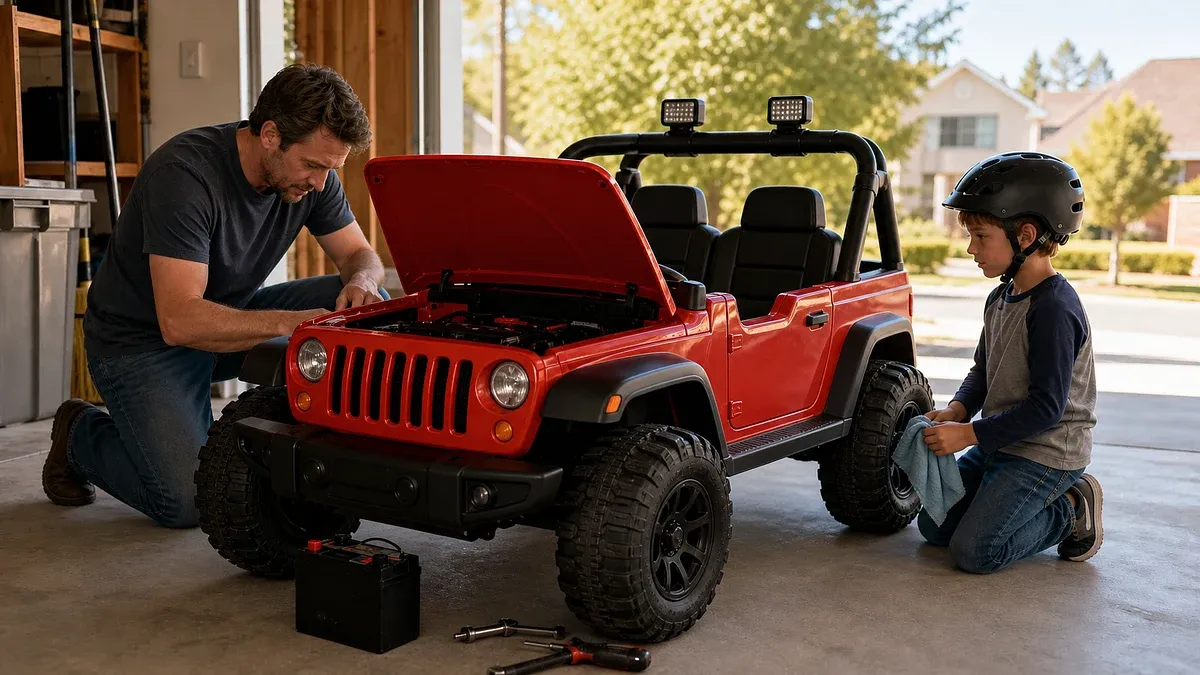
Most ride-on toys that die before their time do not go out in a heroic blaze of backyard glory. They die quietly, in a garage, with a battery that was left discharged for three months and now has the emotional availability of a brick.
That is the good news and the bad news. The bad news: the battery is usually the weak point. The good news: battery care is boringly simple. Charge it fully, do not store it dead, keep it out of punishing heat, and most ride-ons will last far longer than the kid's obsession with construction cones.
A well-maintained 12V ride-on can run for 5–6 seasons. A neglected one can stop taking a charge by year two, at which point everyone stands around saying "but it worked last summer" while the child has already started negotiating for a dirt bike.
This guide covers the practical stuff: battery charging, storage, tires, body cleaning, motor care, and the seasonal checklist that keeps a toy car from becoming a very expensive lawn ornament.
Battery Care
The lead-acid batteries in most 12V and 24V ride-on toys are the component that fails first and fails most preventably. Three rules cover 90% of battery longevity:
Charge fully before first use. The box says this. The manual says this. The tiny warning sheet nobody reads says this. Still: charge it first. Most ride-on batteries ship partially charged, and that first full charge helps establish healthy capacity. Give it the full recommended charge before the kid gets anywhere near the pedal.
Never store it dead. A lead-acid battery that sits discharged for weeks can sulfate, which is battery-speak for "we are not coming back from this with optimism alone." After a long play session, plug it in that evening. Before winter storage, charge it fully and top it up every 4–6 weeks.
Avoid extreme temperatures. Heat is worse than cold for long-term battery health. A freezing garage can temporarily reduce capacity; a hot garage can cook the battery chemistry. If the vehicle has to live in the garage, consider bringing just the battery indoors during temperature extremes.
Tire and Body Maintenance
Plastic wheels require essentially no maintenance beyond removing the occasional pebble, twig, or mystery driveway artifact. Rubber tires, common on Peg Perego and higher-end models, deserve occasional checks for debris and pressure if the model supports inflation.
Clean the body with mild soap and water. Avoid pressure washers. They are satisfying, yes, but they can force water into motor housings and electrical connections, which is a dramatic way to turn "quick cleanup" into "why does it smell electrical?"
Motor Care
Electric motors on most consumer ride-ons are sealed units. There is no oil to change, no carburetor to tune, and no tiny pit crew required. The main enemies are water and grit.
Do not drive through deep puddles. Do not spray water directly at the motor area. After rides on loose dirt or sand, wipe down the undercarriage before storing. This is not glamorous maintenance, but neither is explaining to a 4-year-old that the truck is "resting."
Seasonal Storage
Before winter storage, do the five-minute version of being responsible:
- Charge the battery fully
- Clean the vehicle thoroughly
- Store somewhere with stable temperatures
- Remove the battery and store it separately if the garage has extreme temperature swings
- Set a reminder to top up the battery every 4–6 weeks through winter
That last one matters. Put it on your calendar. Label it something blunt like "charge toy car battery" rather than "maintenance," because future you will not remember what noble little system present you thought you were building.
Quick Comparison
12V Lead-Acid Battery Models
Various
Standard Maintenance Tier
- Voltage
- 12V
- Seats
- 1–2
- Ages
- 3–7
- Price
- $150–$350
24V Battery Models (Peg Perego / Premium)
Peg Perego / Various
Premium Maintenance Tier
- Voltage
- 24V
- Seats
- 1–2
- Ages
- 3–8
- Price
- $300–$600
| Product | Best For | Specs | Price | Rating |
|---|---|---|---|---|
12V Lead-Acid Battery Models Various | Standard Maintenance Tier | 12V · 1–2 seats Ages 3–7 | $150–$350 | 4.0 |
24V Battery Models (Peg Perego / Premium) Peg Perego / Various | Premium Maintenance Tier | 24V · 1–2 seats Ages 3–8 | $300–$600 | 4.5 |
Prices are approximate and subject to change. Always verify current pricing before purchasing.
Our Picks — In Detail
12V Lead-Acid Battery Models
Various
12VSeats
1–2Ages
3–7Price
$150–$350
The maintenance baseline for most families. Lead-acid batteries respond well to consistent charging habits and poorly to neglect. The single most impactful thing you can do: charge after every use, not just when it dies. Run time is 1–2 hours; charge time is 8–12 hours. Replacement batteries are widely available for Power Wheels, Peg Perego, and Kid Trax models — typically $30–$60. If the vehicle runs sluggishly or won't hold a charge, the battery is almost always the culprit.
Pros
- Replacement batteries widely available and affordable
- Simple charging — standard plug, no smart charger needed
- Most issues are battery-related and fixable
Cons
- Sulfates quickly if stored discharged
- Degrades faster in heat
- Shorter lifespan than lithium (2–3 seasons with good care)
24V Battery Models (Peg Perego / Premium)
Peg Perego / Various
24VSeats
1–2Ages
3–8Price
$300–$600
24V batteries require the same care as 12V but with a longer charge cycle (12–18 hours) and a higher replacement cost ($60–$120 for OEM). Peg Perego batteries in particular benefit from their own brand charger — third-party chargers can work but vary in quality. The 18-hour charge time on Peg Perego models is not an exaggeration; it's the actual time needed for a full charge from depleted. Using a lower-spec charger that 'tops up' faster is how people end up with batteries that only hold 60% capacity after one season.
Pros
- Better battery chemistry than most 12V models
- Longer lifespan with proper care (3–5 seasons)
- Replacement batteries available, though pricier
Cons
- 18-hour charge time requires planning
- Replacement batteries more expensive
- Use manufacturer charger only for best results
What to Look For
Voltage (6V / 12V / 24V)
Higher voltage means more power, higher top speed, and better terrain handling. Choose based on your child's age, size, and where they'll ride. 12V is the most popular choice for ages 3–7.
Number of Seats
Single-seat models work for one child; two-seat designs are great for siblings or friends. Two-seaters often put more strain on the motor, so look for adequate power.
Terrain
Most 12V ride-ons handle flat grass and hard surfaces. If you have hills, rough grass, or gravel, look for 24V models with high-traction tires.
Safety Features
Look for seat belts, parental lockout switches, low/high speed settings, and parental remote controls — especially for younger or first-time riders.
Battery & Charging
Check battery life (usually 1–2 hours for 12V) and charge time (8–18 hours). Some premium models offer faster charging or higher-capacity batteries.