12V vs 24V Ride-On Toys: Which Should You Choose?
Not sure whether to get a 12V or 24V ride-on toy? Our independent comparison breaks down the real differences in speed, terrain, battery life, and age-appropriateness.
Affiliate Disclosure
This page contains affiliate links. As an Amazon Associate, PowerWheels HQ may earn a commission on qualifying purchases at no extra cost to you. Our reviews and recommendations are editorially independent.
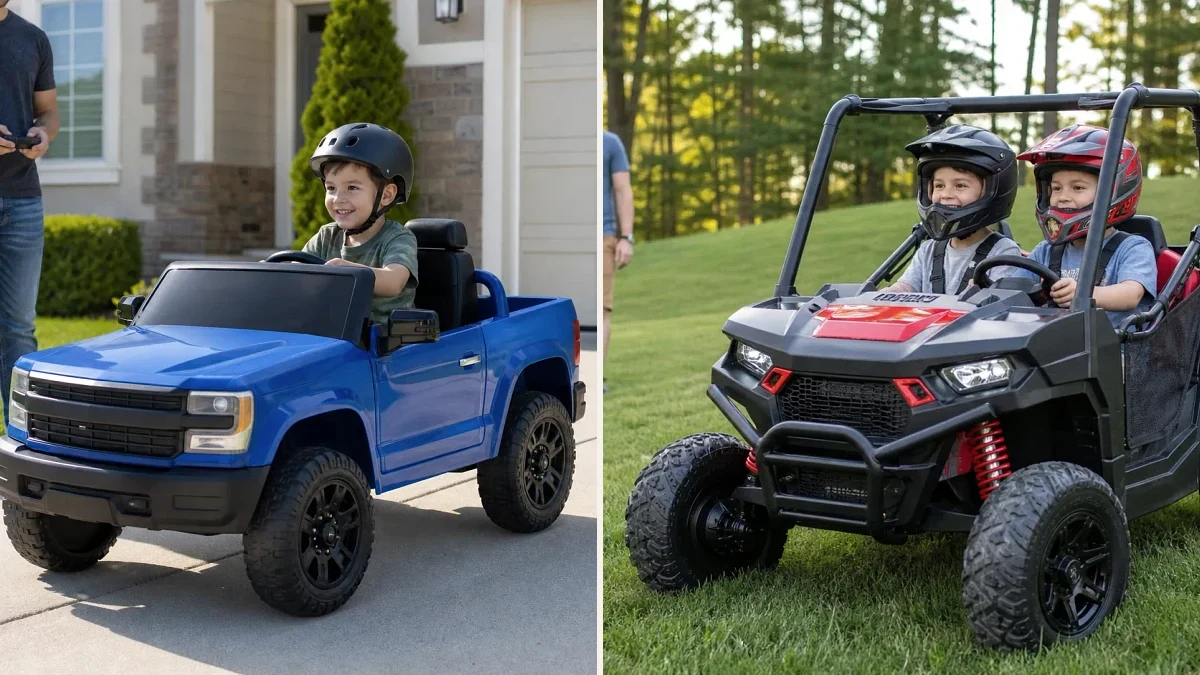
One of the most common questions parents ask when shopping for a ride-on toy is: should I get a 12V or a 24V? The voltage directly affects speed, terrain handling, weight, and price — so it's an important decision.
In this independent guide, we break down exactly what the difference means in practice, and help you figure out which voltage is right for your child's age, size, and the surfaces where they'll be riding.
Quick Comparison
12V Models (e.g., Power Wheels Jeep Wrangler)
Various
Ages 3–7, flat/moderate terrain
- Voltage
- 12V
- Seats
- 1–2
- Ages
- 3–7
- Price
- $150–$350
24V Models (e.g., Peg Perego Polaris RZR)
Various
Ages 5+, rough terrain, hills
- Voltage
- 24V
- Seats
- 1–2
- Ages
- 4–10
- Price
- $300–$600+
| Product | Best For | Specs | Price | Rating |
|---|---|---|---|---|
12V Models (e.g., Power Wheels Jeep Wrangler) Various | Ages 3–7, flat/moderate terrain | 12V · 1–2 seats Ages 3–7 | $150–$350 | 4.2 |
24V Models (e.g., Peg Perego Polaris RZR) Various | Ages 5+, rough terrain, hills | 24V · 1–2 seats Ages 4–10 | $300–$600+ | 4.5 |
Prices are approximate and subject to change. Always verify current pricing before purchasing.
Our Picks — In Detail
12V Models (e.g., Power Wheels Jeep Wrangler)
Various
12VSeats
1–2Ages
3–7Price
$150–$350
The 12V category is where most families land, and they're right to. Three to five mph is fast enough that kids feel genuinely excited and slow enough that steering errors don't become incidents. The selection is enormous — sports cars, Jeeps, trucks, tractors, police cars, dump trucks, fire engines — and prices are reasonable. If your yard is mostly flat, your kid is under 7, and you haven't specifically asked yourself 'but what if there were hills,' 12V is your answer.
Pros
- Right speed for ages 3–7 without being overwhelming
- Largest selection of styles and brands
- More affordable across the board
- Shorter charge times than 24V
Cons
- Struggles on hills, thick grass, and rough terrain
- Lower top speed limits appeal for kids 6+
- Two-passenger models strain more on inclines
24V Models (e.g., Peg Perego Polaris RZR)
Various
24VSeats
1–2Ages
4–10Price
$300–$600+
If your yard has any real slope, thick grass, or gravel — or your kid is over 6 and starting to look bored at 5 mph — 24V is the honest recommendation. A 12V motor struggling uphill with two kids aboard looks exactly like you'd imagine it does. 24V handles that without drama. The charge time jumps to 12–18 hours, which means you're planning a day ahead, and the price jumps noticeably too. But you also stop replacing cheap ride-ons every two years, so it evens out.
Pros
- Handles hills, grass, and rough terrain 12V can't
- Higher top speeds engage older kids
- More power sustains two passengers better
- Better suited for ages 5–10
Cons
- Significantly higher price
- Charge times of 12–18 hours are inconvenient
- Heavier and bulkier models are harder to store
What to Look For
Voltage (6V / 12V / 24V)
Higher voltage means more power, higher top speed, and better terrain handling. Choose based on your child's age, size, and where they'll ride. 12V is the most popular choice for ages 3–7.
Number of Seats
Single-seat models work for one child; two-seat designs are great for siblings or friends. Two-seaters often put more strain on the motor, so look for adequate power.
Terrain
Most 12V ride-ons handle flat grass and hard surfaces. If you have hills, rough grass, or gravel, look for 24V models with high-traction tires.
Safety Features
Look for seat belts, parental lockout switches, low/high speed settings, and parental remote controls — especially for younger or first-time riders.
Battery & Charging
Check battery life (usually 1–2 hours for 12V) and charge time (8–18 hours). Some premium models offer faster charging or higher-capacity batteries.