Power Wheels Battery Not Charging: How to Diagnose and Fix It
Power Wheels battery won't charge? Learn to diagnose whether the battery or charger is the problem — sulfation, dead cells, charger failure, and when to replace vs. repair.
Affiliate Disclosure
This page contains affiliate links. As an Amazon Associate, PowerWheels HQ may earn a commission on qualifying purchases at no extra cost to you. Our reviews and recommendations are editorially independent.
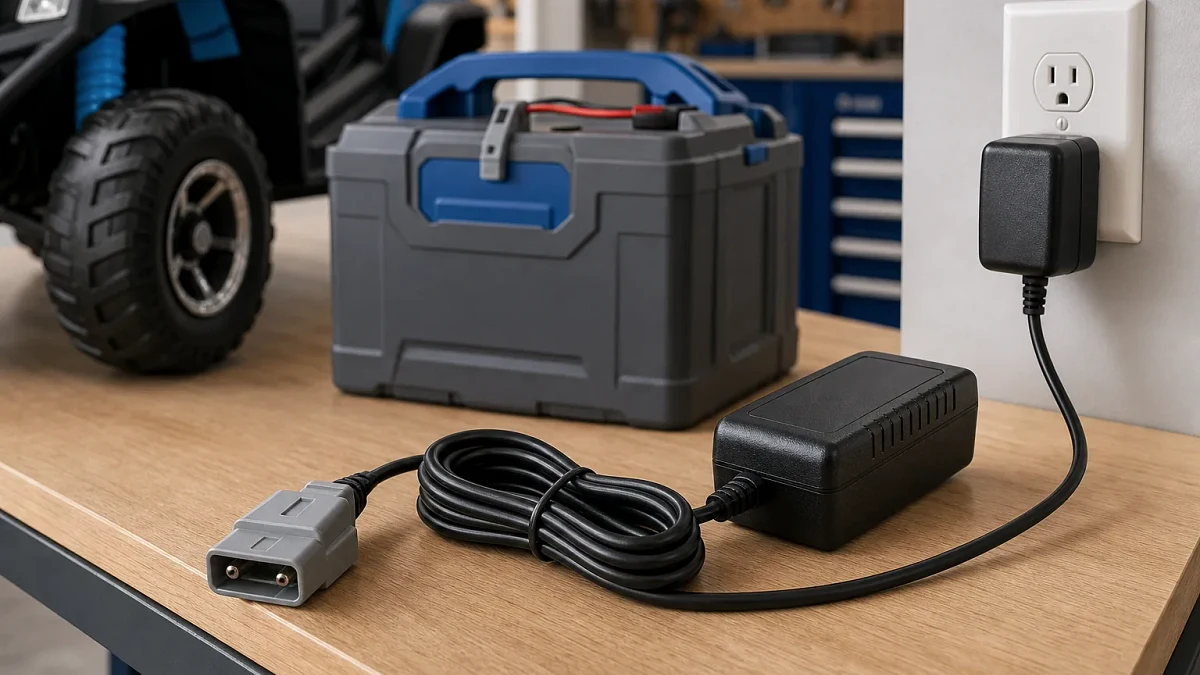
When a Power Wheels battery won't charge, parents usually do one of two things: they assume the charger is broken and buy a new one, or they assume the battery is shot and buy a new one. Both are sometimes right. But buying the wrong one means spending $40–$60 on a part you didn't need. Spend ten minutes diagnosing first.
The good news: there are exactly two things that cause a Power Wheels battery not to charge. Either the battery is the problem, or the charger is the problem. That's it. And with a $15 multimeter, you can figure out which one it is in under five minutes.
Understanding What "Won't Charge" Actually Means
There are a few different symptoms parents describe as "the battery won't charge":
1. The charger indicator light never turns green (or turns green too quickly) 2. The battery charges fully but the vehicle has no run time 3. The vehicle runs briefly then dies, even after hours of charging 4. The charger doesn't seem to be doing anything — no heat, no indicator change
Each of these has a slightly different cause, though battery failure covers most of them.
Start with the Charger
The Power Wheels stock charger is a basic trickle charger with minimal protection circuitry. It is not complicated, but it does fail — usually from overuse, a bad outlet, or a damaged cord.
Testing the charger: Use a multimeter set to DC voltage mode. Insert the probes into the charger plug (the end that goes into the battery, not the wall). A working charger should read between 13V and 14.5V with nothing connected. If it reads 0V, the charger is dead. If it reads 12V or below, the charger is putting out insufficient voltage to charge the battery.
The charger costs $20–$35 to replace. If it tests bad, replace it.
Testing the Battery
If the charger tests fine, the battery is the likely culprit. Here's how to assess it:
Fully charge the battery using a known-good charger (or the charger you've confirmed works). Then measure voltage across the battery terminals with a multimeter.
A healthy, fully charged 12V lead-acid battery should read 12.6V to 12.8V. A battery reading 12.0–12.5V is partially degraded but may still work. A battery reading below 12V is significantly degraded. A battery reading below 11.5V is essentially dead and will provide minimal run time regardless of how long you charge it.
What Is Sulfation and Can You Fix It
Sulfation is what happens to a lead-acid battery that has been deeply discharged and then sat for an extended period without being recharged. Lead sulfate crystals form on the battery plates, reducing the surface area available for chemical reaction and permanently damaging capacity.
A mildly sulfated battery can sometimes be recovered using a battery desulfator or smart charger with a "reconditioning" mode. The Battery Tender Plus and NOCO Genius chargers both include reconditioning modes. Leave the battery on a reconditioning charge cycle for 24–48 hours and re-test.
A severely sulfated battery — one that has been deeply discharged and stored for months — typically cannot be recovered. The crystal formation is too extensive. Replace the battery.
The Dead Cell Problem
Lead-acid batteries are made of individual cells. In a 12V battery, there are six 2V cells in series. If one cell fails, the battery loses 2V of capacity — it becomes effectively a 10V battery that cannot adequately power a 12V motor. The vehicle may run briefly then die, or may not run at all.
You can't repair a dead cell in a sealed lead-acid battery. Replacement is the only option.
Indicator: Battery charges to 10–10.5V but not higher, even after 18+ hours on a known-good charger.
When to Replace vs. Repair
Replace the battery if: it's over 2 years old and showing degraded run time, it tests below 12V fully charged, or it charges to only 10–11V (dead cell). The OEM replacement runs $30–$50.
Replace the charger if: it tests below 13V output on a multimeter, the cord or plug is visibly damaged, or it produces no heat and no indicator after 2+ hours connected to a good battery.
Replace both if: the vehicle is old, has been stored improperly, and you're not sure when either was last working properly. Starting fresh with a new battery and verified charger saves diagnostic time.
Preventing Future Charging Problems
The main cause of premature battery death in Power Wheels is improper storage: leaving the battery fully discharged over the winter, or leaving it uncharged for weeks between uses. A lead-acid battery stored at full discharge will begin sulfating within days.
Store the battery at full charge. Check it every 4–6 weeks during off-season storage and top it up if voltage drops below 12.4V. A smart charger like the Battery Tender Plus can maintain voltage automatically without overcharging — it's the best $40 investment for extending battery life.
Quick Comparison
Power Wheels 12V Battery Charger
Power Wheels
OEM replacement charger
- Voltage
- 12V
- Seats
- N/A
- Ages
- N/A
- Price
- $20-$35
NOCO GENIUS1 Smart Charger
NOCO
Smart replacement charger with repair mode
- Voltage
- 12V
- Seats
- N/A
- Ages
- N/A
- Price
- $30-$45
Battery Tender Plus 12V
Battery Tender
Long-term battery maintenance and storage
- Voltage
- 12V
- Seats
- N/A
- Ages
- N/A
- Price
- $40-$55
AstroAI Digital Multimeter
AstroAI
Diagnosing battery vs. charger problem
- Voltage
- N/A
- Seats
- N/A
- Ages
- N/A
- Price
- $13-$20
Power Wheels 12V Replacement Battery (OEM)
Power Wheels
Replacing confirmed dead battery
- Voltage
- 12V
- Seats
- N/A
- Ages
- N/A
- Price
- $30-$50
| Product | Best For | Specs | Price | Rating |
|---|---|---|---|---|
Power Wheels 12V Battery Charger Power Wheels | OEM replacement charger | 12V · N/A seats Ages N/A | $20-$35 | 3.9 |
NOCO GENIUS1 Smart Charger NOCO | Smart replacement charger with repair mode | 12V · N/A seats Ages N/A | $30-$45 | 4.7 |
Battery Tender Plus 12V Battery Tender | Long-term battery maintenance and storage | 12V · N/A seats Ages N/A | $40-$55 | 4.8 |
AstroAI Digital Multimeter AstroAI | Diagnosing battery vs. charger problem | N/A · N/A seats Ages N/A | $13-$20 | 4.5 |
Power Wheels 12V Replacement Battery (OEM) Power Wheels | Replacing confirmed dead battery | 12V · N/A seats Ages N/A | $30-$50 | 4.1 |
Prices are approximate and subject to change. Always verify current pricing before purchasing.
Our Picks — In Detail
Power Wheels 12V Battery Charger
Power Wheels
12VSeats
N/AAges
N/APrice
$20-$35
The OEM replacement charger for most Power Wheels models. Basic trickle charger design — it works but lacks the smart charging features that extend battery life. Test your existing charger before replacing it.
Pros
- OEM compatibility
- Inexpensive
- Widely available
Cons
- No smart charging — can slightly overcharge
- Minimal diagnostic feedback
NOCO GENIUS1 Smart Charger
NOCO
12VSeats
N/AAges
N/APrice
$30-$45
Smart charger with reconditioning mode that can recover mildly sulfated batteries. Won't overcharge, includes error detection for bad batteries, and charges safely. Worth the upgrade from the stock Power Wheels charger if you've had battery problems.
Pros
- Reconditioning mode recovers some sulfated batteries
- Won't overcharge
- Detects bad/shorted batteries
Cons
- Connector requires adapter for Power Wheels plug
- Overkill if battery is simply old
Battery Tender Plus 12V
Battery Tender
12VSeats
N/AAges
N/APrice
$40-$55
The gold standard for keeping a lead-acid battery healthy during storage. Plug in after the season, leave it connected all winter — it maintains charge without overcharging. Significantly extends battery life if used consistently.
Pros
- Maintains battery health during off-season storage
- Won't overcharge
- Proven track record over decades
Cons
- Requires adapter for Power Wheels connector
- More expensive than OEM charger
AstroAI Digital Multimeter
AstroAI
N/ASeats
N/AAges
N/APrice
$13-$20
The diagnostic tool that tells you whether you need a battery or a charger. Test charger output (should be 13-14.5V) and battery voltage (should be 12.6V+ when fully charged). A $15 investment that prevents buying the wrong $40 part.
Pros
- Definitively diagnoses battery vs. charger
- Inexpensive
- Useful for all household electrical diagnosis
Cons
- Requires basic knowledge to use correctly
- Won't help without knowing what the readings mean
Power Wheels 12V Replacement Battery (OEM)
Power Wheels
12VSeats
N/AAges
N/APrice
$30-$50
OEM replacement battery once you've confirmed the battery is the issue. Don't buy this before testing — it's $30–$50 and you don't want to find out it was the charger all along.
Pros
- OEM fit with correct connectors
- Available for all major Power Wheels models
- Reliable once you've confirmed the problem
Cons
- Wasted money if the charger was the problem
- Lead-acid will need replacement again in 1-3 years
What to Look For
Voltage (6V / 12V / 24V)
Higher voltage means more power, higher top speed, and better terrain handling. Choose based on your child's age, size, and where they'll ride. 12V is the most popular choice for ages 3–7.
Number of Seats
Single-seat models work for one child; two-seat designs are great for siblings or friends. Two-seaters often put more strain on the motor, so look for adequate power.
Terrain
Most 12V ride-ons handle flat grass and hard surfaces. If you have hills, rough grass, or gravel, look for 24V models with high-traction tires.
Safety Features
Look for seat belts, parental lockout switches, low/high speed settings, and parental remote controls — especially for younger or first-time riders.
Battery & Charging
Check battery life (usually 1–2 hours for 12V) and charge time (8–18 hours). Some premium models offer faster charging or higher-capacity batteries.