Are Power Wheels Worth It? An Honest Cost Breakdown
Are Power Wheels worth the money? Yes — if your kid is 2-6, you have outdoor space, and you buy the right voltage. The honest math, the cost-per-use numbers, and the cases where you should skip it.
Affiliate Disclosure
This page contains affiliate links. As an Amazon Associate, PowerWheels HQ may earn a commission on qualifying purchases at no extra cost to you. Our reviews and recommendations are editorially independent.
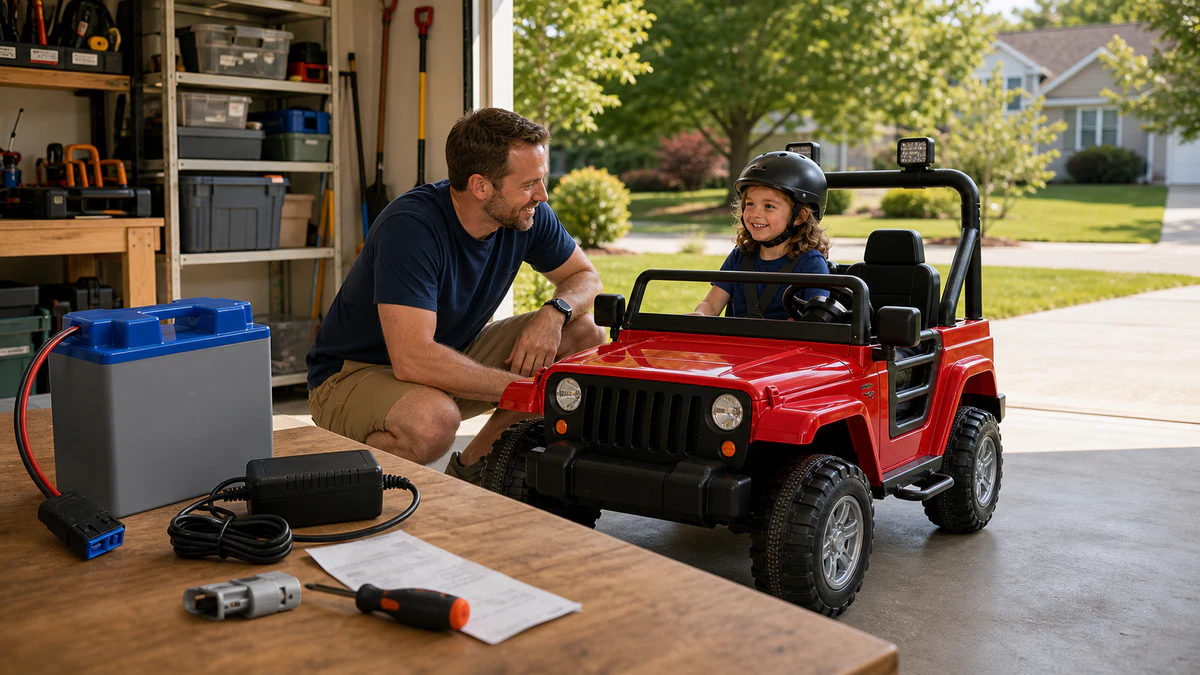
Yes — if your kid is 2-6, you have outdoor space, and you buy the right voltage for their age and your terrain. Miss any of those three and the answer flips, and here is the thing the reviews never quite say: when a ride-on disappoints a family, the product almost never failed. The expectations did. A 6V car sent onto a grass lawn, a vehicle bought for a kid one season from outgrowing it, a battery left dead in the garage all winter — those are the failure modes, and every one of them is a buying decision, not a defect.
So this page does the math honestly, in both directions.
The Cost-Per-Use Math
Take the standard purchase: a $300 12V vehicle for a 3-year-old. Used twice a week from spring through fall — call it 40 weeks a year across two years, which is the realistic ownership window before the kid grows past it — that is 160 sessions. Under $2 per session of a toy your kid begs for. Stretch it to a third season or hand it to a sibling and the number drops near a dollar.
Now put that against the big-toy competition. A swing set runs $500-1,500 and wins on lifespan. A trampoline runs $300-600 with a similar window and a worse injury profile. A single bounce-house birthday rental is $150-300 for one afternoon. In that lineup, a correctly chosen ride-on is one of the cheaper line items in the backyard economy — and it is usually the one with the highest voluntary usage. Kids have to be told to get off it, not on it.
And ride-ons hold resale value. A name-brand vehicle in decent shape sells locally for 30-50 percent of retail, which quietly cuts your true cost. A $300 Jeep sold for $120 after two years cost you $180 — nearly the price of one bounce-house afternoon.
The Three Conditions, Because They Do the Work
Age 2-6. The sweet spot. Younger than 2 needs a parent-controlled 6V and gets a shorter runway; older than 6 is one growth spurt from finding 5 mph boring, and the money belongs in the 24V tier or a Razor instead.
Outdoor space. A driveway, a yard, a quiet cul-de-sac, a park you will actually walk to. The vehicle needs somewhere to live and somewhere to run. This is the condition apartment families hit hardest, and no discount fixes it.
Right voltage. 6V for pavement and toddlers. 12V for ages 3-5 on driveway and short grass. 24V for grass, hills, and kids 5-plus. The single most common regret purchase in this category is a 6V vehicle crawling and stalling across a lawn it was never built for.
When They Are Genuinely Not Worth It
Skip the purchase without guilt if: you live in an apartment with no storage and no riding surface — the vehicle becomes hallway furniture inside a month. Your kid is already 6-7 and has never asked — buy the bigger-kid category instead of the tail end of this one. You cannot store it out of the weather — sun and rain kill plastic and batteries faster than any kid does. Or the kid in question has a sibling gap that means the hand-me-down goes to nobody. In each of those cases the honest cost-per-use math collapses, and the same money does more elsewhere.
One Non-Negotiable Habit
Whatever you buy, the battery is the whole game. Charge it after every use, top it up monthly over winter, never store it dead. A maintained battery lasts 2-3 years; a neglected one dies in one, adds a $50-70 replacement to your math, and is the number one source of "these things are junk" reviews written about a product that was fine.
The picks below are the vehicles that make the math work — the strongest value at each tier of the decision.
Quick Comparison
6V Toddler Quad
Kid Trax
The $100 test — the cheapest way to learn if your kid is a rider
- Voltage
- 6V
- Seats
- 1
- Ages
- 1.5-3 years
- Price
- $80-$120
12V Kids Truck
Best Choice Products
The value 12V — remote, speeds, and lights under $250
- Voltage
- 12V
- Seats
- 1
- Ages
- 3-6 years
- Price
- $180-$250
Dune Racer Extreme
Power Wheels
The mainstream sweet spot — durability and resale in one buy
- Voltage
- 12V
- Seats
- 2
- Ages
- 3-7 years
- Price
- $300-$400
Torex 24V UTV
Huffy
The right-voltage buy for grass, hills, and kids 5-plus
- Voltage
- 24V
- Seats
- 2
- Ages
- 5-8 years
- Price
- $400-$500
John Deere Gator XUV550
Peg Perego
The buy-once play — multiple kids, a decade, then resale
- Voltage
- 12V
- Seats
- 2
- Ages
- 3-8 years
- Price
- $400-$500
| Product | Best For | Specs | Price | Rating |
|---|---|---|---|---|
6V Toddler Quad Kid Trax | The $100 test — the cheapest way to learn if your kid is a rider | 6V · 1 seat Ages 1.5-3 years | $80-$120 | 4.3 |
12V Kids Truck Best Choice Products | The value 12V — remote, speeds, and lights under $250 | 12V · 1 seat Ages 3-6 years | $180-$250 | 4.2 |
Dune Racer Extreme Power Wheels | The mainstream sweet spot — durability and resale in one buy | 12V · 2 seats Ages 3-7 years | $300-$400 | 4.7 |
Torex 24V UTV Huffy | The right-voltage buy for grass, hills, and kids 5-plus | 24V · 2 seats Ages 5-8 years | $400-$500 | 4.3 |
John Deere Gator XUV550 Peg Perego | The buy-once play — multiple kids, a decade, then resale | 12V · 2 seats Ages 3-8 years | $400-$500 | 4.7 |
Prices are approximate and subject to change. Always verify current pricing before purchasing.
Our Picks — In Detail
6V Toddler Quad
Kid Trax
6VSeats
1Ages
1.5-3 yearsPrice
$80-$120
The lowest-risk entry in the entire category. If a $100 quad gets ridden daily, you have your answer about the bigger purchase next year; if it gets ignored, you found out for $100 instead of $400. Either way the math works.
Pros
- Cheapest meaningful test of ride-on interest
- One-button toddler operation — correct for the age
- Resells easily because the price floor is low
Cons
- Outgrown by age 3 no matter how much they love it
- Pavement and short grass only at 6V
12V Kids Truck
Best Choice Products
12VSeats
1Ages
3-6 yearsPrice
$180-$250
The budget path through the core 3-5 window: a 12V truck with parental remote, selectable speeds, and working lights at a price where cost-per-use math becomes almost unarguable. Build quality is honest for the price — this is a 2-3 season vehicle, which is exactly the window it needs to cover.
Pros
- Parental remote covers the young end of the age range
- Full 12V feature set at a near-entry price
- Cost-per-use math works even with zero resale
Cons
- Plastic tires and light build show the price on rough ground
- Single seat limits sibling value
Dune Racer Extreme
Power Wheels
12VSeats
2Ages
3-7 yearsPrice
$300-$400
The strongest total-value play in the core category: the best terrain handling of any stock Power Wheels, metal sidebars, two seats for the sibling years, and the brand-name resale value that returns a real chunk of the price when you are done.
Pros
- Best grass performance in the stock Power Wheels line
- Two seats double the household value
- Strong resale demand cuts true ownership cost
Cons
- Open-cockpit styling loses to trucks and Jeeps for some kids
- Still 12V — big yards and hills argue for 24V money
Torex 24V UTV
Huffy
24VSeats
2Ages
5-8 yearsPrice
$400-$500
If your terrain is lawn and your kid is 5 or older, this is where the money belongs — 24V power that treats grass as intended terrain rather than an obstacle. Buying this instead of a struggling 12V is the single decision that prevents the most common regret in the category.
Pros
- 24V handles the grass-and-hills use case 12V cannot
- Two seats and a 150 lb capacity span years of use
- Speed settings let it start slow and grow with the kid
Cons
- Meaningful price step over the 12V tier
- Bulk demands real storage space
John Deere Gator XUV550
Peg Perego
12VSeats
2Ages
3-8 yearsPrice
$400-$500
The longevity argument in vehicle form. If you have two or more kids coming through the age window, the Gator's decade-grade durability and parts support make it the cheapest option per year of service in the entire category — the premium price amortizes into a bargain.
Pros
- Routinely survives multiple children and a decade of use
- Parts network keeps it repairable instead of disposable
- Best-in-category resale value at the end
Cons
- Highest upfront price in this table
- The premium is wasted on a one-kid, two-season window
What to Look For
Voltage (6V / 12V / 24V)
Higher voltage means more power, higher top speed, and better terrain handling. Choose based on your child's age, size, and where they'll ride. 12V is the most popular choice for ages 3–7.
Number of Seats
Single-seat models work for one child; two-seat designs are great for siblings or friends. Two-seaters often put more strain on the motor, so look for adequate power.
Terrain
Most 12V ride-ons handle flat grass and hard surfaces. If you have hills, rough grass, or gravel, look for 24V models with high-traction tires.
Safety Features
Look for seat belts, parental lockout switches, low/high speed settings, and parental remote controls — especially for younger or first-time riders.
Battery & Charging
Check battery life (usually 1–2 hours for 12V) and charge time (8–18 hours). Some premium models offer faster charging or higher-capacity batteries.