Best Peg Perego Ride-Ons: What the Premium Actually Buys
The best Peg Perego ride-ons — John Deere Gator, Ground Force tractor, Polaris RZR 900 and Outlaw. Why they cost more, when the premium is worth it, and the honest downsides: charge times, prices, parts costs.
Affiliate Disclosure
This page contains affiliate links. As an Amazon Associate, PowerWheels HQ may earn a commission on qualifying purchases at no extra cost to you. Our reviews and recommendations are editorially independent.
Looking for the best peg perego ride-ons? Our top pick is the John Deere Gator XUV550. It leads this guide as the benchmark — the ride-on most likely to outlast your kids with a 4.7/5 rating. The full comparison and the tradeoffs are below.
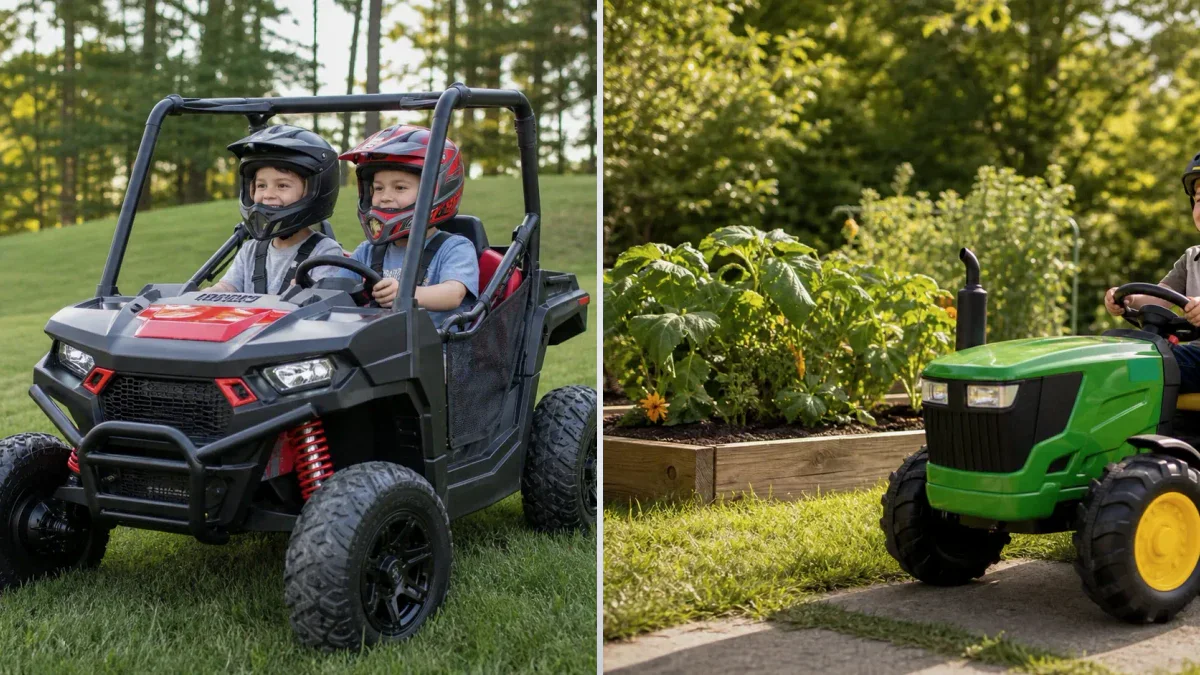
Peg Perego is the premium tier of the ride-on market, and unlike most premium labels, the money shows up in the hardware. Buy one when you want the vehicle to survive multiple kids, real terrain, and a decade in the garage. Skip it when your kid will age out in two seasons and a cheaper vehicle covers the window — the premium only pays off over time you actually use.
The company is a family-owned Italian manufacturer that has been building children's products since 1949 and battery ride-ons for decades, with U.S. operations in Indiana. Its ride-on business runs on two licenses it has held forever: John Deere — the Gator utility vehicle and the Ground Force tractor line — and Polaris, the RZR 900 side-by-side and the Outlaw quad. Nothing in the lineup chases trends. The Gator your neighbor's kids drove fifteen years ago is recognizably the same machine sold today, which tells you something about how it is engineered.
What the Premium Actually Buys
Four concrete things, not vibes.
Motors and gearboxes built to be worked. Peg Perego drivetrains are noticeably more robust than big-box equivalents — they hold speed under load, climb grades that stall cheaper vehicles, and survive years of the abuse that grinds budget gearboxes into plastic shavings.
Tires that actually grip. Chunky, aggressively treaded wheels with grippier compounds than the slick hard plastic on standard Power Wheels. On grass, gravel, dirt, and mild slopes — where these vehicles are designed to live — the traction difference is immediate and obvious.
Real vehicle features. The Gator has a functioning dump bed with a tailgate. The Ground Force tractor pulls an actual trailer. The RZR has adjustable seats and real suspension travel. These are not decals pretending to be features.
Longevity and parts. This is the quiet killer argument. Peg Perego maintains a genuine parts network — motors, gearboxes, wheels, batteries, chargers — reaching back years. A Gator with a dead gearbox is a $40 repair, not a landfill trip. It is the only major ride-on brand where a hand-me-down through three kids is normal rather than lucky, and resale values reflect it.
The Honest Downsides
Three of them, and they are real. First, charging: Peg Perego's stock chargers are slow. The first charge runs up to 18 hours, and routine full charges take 8-12. No quick charger comes in the box. Impatient households buy a second battery, which brings us to the second problem: everything in the ecosystem is priced like the vehicles. Replacement batteries and spare parts cost genuinely more than big-box equivalents — the parts network is a paid amenity, not a charity. Third, the vehicles themselves cost 30-60 percent more than spec-comparable rivals, and the sticker stings hardest in the 12V range, where a Ryder or Best Choice 24V undercuts a 12V RZR while beating it on voltage.
The Math That Decides It
One kid, suburban driveway, 2-3 season window: the premium mostly buys durability you will not use — get the cheaper vehicle. Multiple kids, real yard, grass and dirt, hand-me-down plans: the Peg Perego is frequently the cheapest option per year of service, especially after resale. This is a brand whose value appears in year four, and year four only counts if you get there.
The lineup below covers both licenses. The Gator is the correct default — if you read nothing else, read that entry.
Quick Comparison
John Deere Gator XUV550
Peg Perego
The benchmark — the ride-on most likely to outlast your kids
- Voltage
- 12V
- Seats
- 2
- Ages
- 3-8 years
- Price
- $400-$500
John Deere Ground Force Tractor with Trailer
Peg Perego
The farm-kid pick — a real working tractor with a real trailer
- Voltage
- 12V
- Seats
- 1
- Ages
- 3-7 years
- Price
- $270-$350
Polaris RZR 900
Peg Perego
The side-by-side — RZR styling on the proven Peg drivetrain
- Voltage
- 12V
- Seats
- 2
- Ages
- 3-8 years
- Price
- $430-$550
Polaris Sportsman 850 24V
Peg Perego
The performance flagship — Peg build quality with real 24V speed
- Voltage
- 24V
- Seats
- 2
- Ages
- 5-9 years
- Price
- $550-$700
Polaris Outlaw Quad
Peg Perego
The single-rider quad — ATV feel with Peg reliability
- Voltage
- 12V
- Seats
- 1
- Ages
- 3-7 years
- Price
- $300-$380
| Product | Best For | Specs | Price | Rating |
|---|---|---|---|---|
John Deere Gator XUV550 Peg Perego | The benchmark — the ride-on most likely to outlast your kids | 12V · 2 seats Ages 3-8 years | $400-$500 | 4.7 |
John Deere Ground Force Tractor with Trailer Peg Perego | The farm-kid pick — a real working tractor with a real trailer | 12V · 1 seat Ages 3-7 years | $270-$350 | 4.6 |
Polaris RZR 900 Peg Perego | The side-by-side — RZR styling on the proven Peg drivetrain | 12V · 2 seats Ages 3-8 years | $430-$550 | 4.5 |
Polaris Sportsman 850 24V Peg Perego | The performance flagship — Peg build quality with real 24V speed | 24V · 2 seats Ages 5-9 years | $550-$700 | 4.5 |
Polaris Outlaw Quad Peg Perego | The single-rider quad — ATV feel with Peg reliability | 12V · 1 seat Ages 3-7 years | $300-$380 | 4.4 |
Prices are approximate and subject to change. Always verify current pricing before purchasing.
Our Picks — In Detail
John Deere Gator XUV550
Peg Perego
12VSeats
2Ages
3-8 yearsPrice
$400-$500
The default Peg Perego and one of the best ride-ons ever made: two seats, two speeds plus reverse, a working dump bed, and a drivetrain that treats grass and dirt as intended terrain rather than a challenge. This is the vehicle the longevity reputation is built on.
Pros
- Legendary durability — routinely survives multiple children
- Working dump bed makes it a yard tool, not just a ride
- Confident traction on grass, gravel, and mild slopes
Cons
- 4.5 mph top speed is modest for the price
- Stock charger is slow — plan on overnight-plus charges
John Deere Ground Force Tractor with Trailer
Peg Perego
12VSeats
1Ages
3-7 yearsPrice
$270-$350
The most affordable entry into Peg Perego quality, and the tractor-obsessed kid's dream: authentic John Deere styling, two speeds plus reverse, an FM radio, and a detachable trailer that will haul mulch, stuffed animals, and younger siblings' belongings for years.
Pros
- Cheapest path into Peg Perego build quality
- Detachable trailer adds endless hauling play
- Authentic Deere styling down to the details
Cons
- Single seat — no passenger without buying the trailer ride at your own risk
- Tractor pace tops out around 4.5 mph
Polaris RZR 900
Peg Perego
12VSeats
2Ages
3-8 yearsPrice
$430-$550
The Gator's cooler sibling: licensed RZR bodywork, adjustable bucket seats, and mini suspension on the same class of drivetrain. Kids pick it over the Gator on looks alone. Parents should know it is 12V at a price where rivals sell 24V — you are paying for build, not speed.
Pros
- RZR styling kids covet, with adjustable seats that grow with them
- Same durable motor and gearbox package as the Gator
- Handles rough ground better than nearly any 12V rival
Cons
- 12V at a price point where competitors offer 24V
- No dump bed or hauling utility — style over function versus the Gator
Polaris Sportsman 850 24V
Peg Perego
24VSeats
2Ages
5-9 yearsPrice
$550-$700
The answer to the brand's one weakness: a 24V ATV that pairs the durable drivetrain with genuine speed — up to about 7 mph — and serious terrain ability. It is the most expensive vehicle here and the one that keeps a big kid interested past the point where 12V machines get parked.
Pros
- Around 7 mph with the torque to hold it on grass and grades
- Peg Perego durability applied to a proper big-kid machine
- High weight capacity carries kids to 9 and beyond
Cons
- Flagship pricing — this costs more than some kids' bicycles plus gear
- Too much machine for riders under 5
Polaris Outlaw Quad
Peg Perego
12VSeats
1Ages
3-7 yearsPrice
$300-$380
A straddle-seat 12V quad with real Polaris styling for the kid who wants an ATV rather than a car. Two speeds plus reverse, grippy treaded wheels, and the usual Peg drivetrain in the brand's most compact package — easier to store than anything else in the lineup.
Pros
- Straddle ATV riding position kids find more exciting than a seat
- Compact footprint stores where Gators and RZRs cannot
- Same drivetrain reliability in a cheaper package
Cons
- Single rider only — sibling households will hear about it
- Straddle seating suits confident riders; timid kids prefer the Gator bench
What to Look For
Voltage (6V / 12V / 24V)
Higher voltage means more power, higher top speed, and better terrain handling. Choose based on your child's age, size, and where they'll ride. 12V is the most popular choice for ages 3–7.
Number of Seats
Single-seat models work for one child; two-seat designs are great for siblings or friends. Two-seaters often put more strain on the motor, so look for adequate power.
Terrain
Most 12V ride-ons handle flat grass and hard surfaces. If you have hills, rough grass, or gravel, look for 24V models with high-traction tires.
Safety Features
Look for seat belts, parental lockout switches, low/high speed settings, and parental remote controls — especially for younger or first-time riders.
Battery & Charging
Check battery life (usually 1–2 hours for 12V) and charge time (8–18 hours). Some premium models offer faster charging or higher-capacity batteries.